
TIMELINE
Aug 2025 - Nov 2025
PLATFORM
Responsive Website
MY ROLE
UI/UX Designer
Introduction
Travel House is a premier online booking platform tailored for high-end homestays and serviced apartments. Rooted in the philosophy of "Balance and Essentials," the project aims to provide a serene digital space where users can find their perfect stay with ease.
My Role
As the Lead UI Designer, I was responsible for the end-to-end visual identity and interface design of the Travel House platform:
Curating the Moodboard to define the visual direction.
Developing a comprehensive Design System (Colors, Typography, Components).
Executing the Final UI Design for a seamless cross-platform web experience.
Design process
Sitemap
To eliminate the "manual bottleneck," we aim to transition from a chat-based booking model to a 100% automated platform. This shift will reduce human dependency, eliminate data errors (such as overbooking), and allow the business to scale its operations across multiple branches without increasing overhead costs.

Design Systems
To ensure Travel House could scale efficiently across multiple branches and platforms, I built a comprehensive Design System. This isn't just a collection of UI elements; it’s a blueprint that ensures consistency, reduces technical debt, and allows for rapid iteration as the business grows.

Wireframe
I developed wireframes to establish a solid structural foundation. By stripping away visuals, I was able to prioritize a clean information hierarchy and ensure a frictionless, automated journey for our GenZ users before moving to high-fidelity design.


Moodboarding
I developed 4 distinct visual demos to explore how our core palette (#17B5B2) and minimalist philosophy could best resonate with GenZ. Each direction tests a different balance of white space, bold typography, and lifestyle imagery. This iterative process allowed me to fine-tune the "Look & Feel" that perfectly captures the brand's essence: Tranquility meets Technology.


Final Designs
After rigorous research and iterative prototyping, the final solution for Travel House was born. The design doesn't just prioritize a "pretty" interface; it’s a high-conversion engine designed to transform the chaotic "Chat-to-Book" manual process into a frictionless, self-service digital experience.
📱 Mobile-First Experience
I designed the platform to be seamlessly cross-device. While the Desktop version is optimized for deep evaluation and viewing room quality, the Mobile interface is a refined, high-performance twin. I ensured that no functionality was sacrificed; instead, every screen was meticulously reorganized to be clean and intuitive, allowing users to move from "browsing on PC" to "booking on Mobile" with zero friction.

⚡ Instant Booking Automation
I eliminated the need for manual inquiry by centralizing all high-consideration data. By providing an extensive gallery of unedited, real-life photos alongside comprehensive room details and live availability, I empowered users to make informed decisions instantly. This "all-in-one" information strategy removes the waiting game and secures the booking before the user's interest fades.

🔄 Flexible Stay-Mode Selector
I engineered an Adaptive Booking Engine that allows users to toggle seamlessly between Hourly, Daily, and Overnight modes. The UI dynamically recalibrates all input fields, time pickers, and pricing calculations in real-time. By offering this granular control, the platform ensures that users only pay for exactly what they need, maximizing both utility and customer satisfaction.
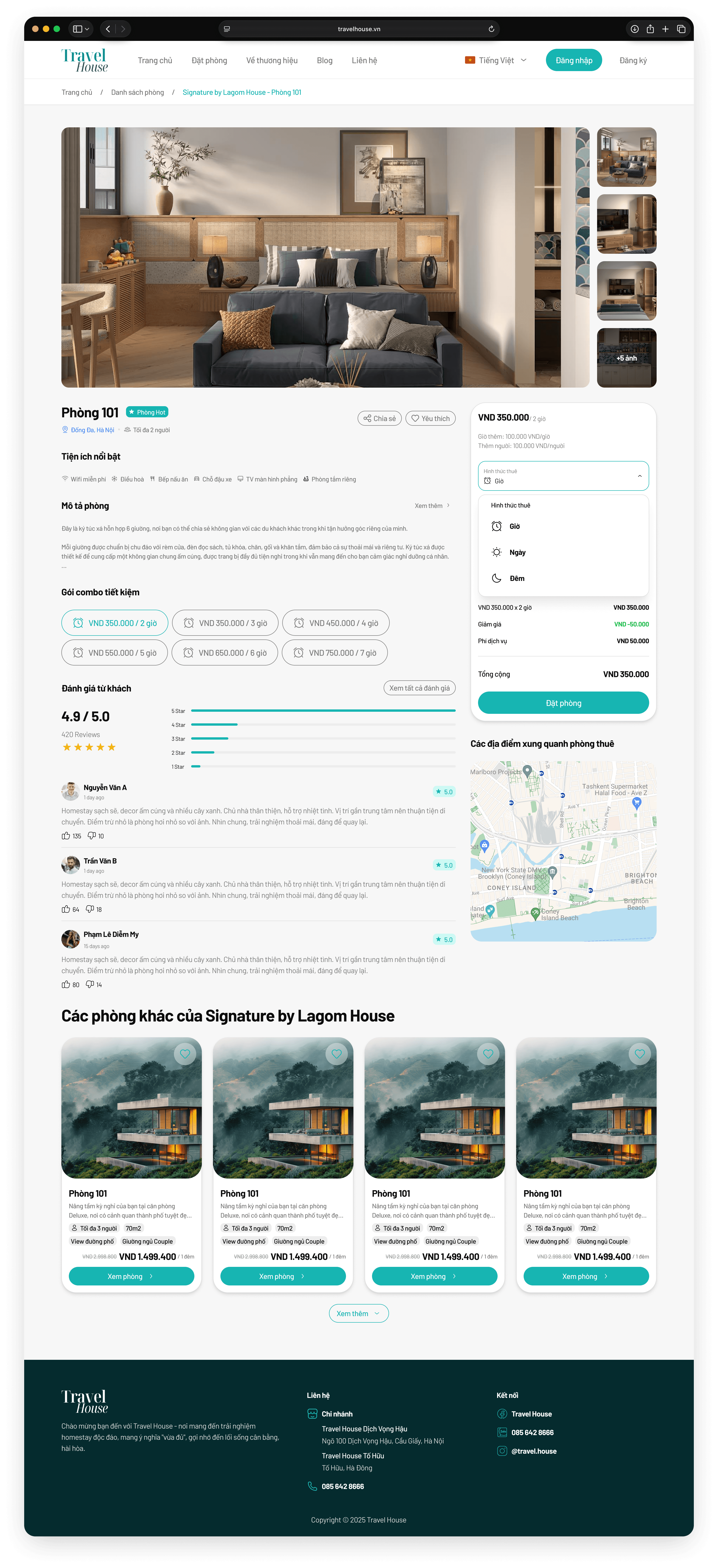
💳 Integrated Checkout & Auto-Confirmation
I replaced the fragmented manual flow with a Unified Payment Gateway that supports automated QR codes and popular E-wallets. By integrating a real-time transaction listener, the system triggers an immediate "Success" state upon payment, providing users with an instant E-ticket and check-in instructions. This seamless transition from payment to confirmation ensures a frictionless conclusion to the customer journey.

What I learned after the project?
🚧 Challenges
Tight Project Timeline
Faced with an extremely demanding deadline, I had to master the art of prioritization. By focusing on Core Features (MVP) and implementing strict time management, I ensured that the design quality remained uncompromised despite the rapid pace.
Entering a completely unfamiliar industry required a steep learning curve. I conducted accelerated research into the travel market and GenZ booking behaviors to ensure every design decision was both accurate and practical.
Due to limited company resources, comprehensive Usability Testing was not feasible. To bridge this gap, I proactively applied Heuristic Evaluation standards and maintained a continuous feedback loop with stakeholders to optimize the product within the given constraints.
🎓 What I Learned
I successfully integrated AI into my design process, from initial ideation to content optimization. This not only allowed me to meet tight deadlines but also transformed my perspective on leveraging technology to amplify creative productivity.
This project provided me with deep insights into the Booking sector, ranging from complex system operational logic to the psychological triggers of users in the hospitality industry.
I developed a scalable and project-specific Design System. This experience deepened my understanding of component inheritance and the importance of maintaining brand consistency across a complex ecosystem of screens.
Thank you for scrolling!
I appreciate the time you took to explore my journey with Travel House. This project was a significant milestone in my growth as a Product Designer, and I’m excited to bring these insights into my next challenge.
Let’s connect and create something amazing together!


